
All Bat, No Balls

Hugo Black was a Klansman and a Supreme Court Justice. In 1966, he was the sole dissent when the Court upheld the Voting Rights Act's preclearance provision—requiring states to get federal approval before changing voting laws. Not quite 50 years later, John Roberts struck down preclearance in his 2013 Shelby County v. Holder opinion. In her dissent, Ruth Bader Ginsburg wrote:
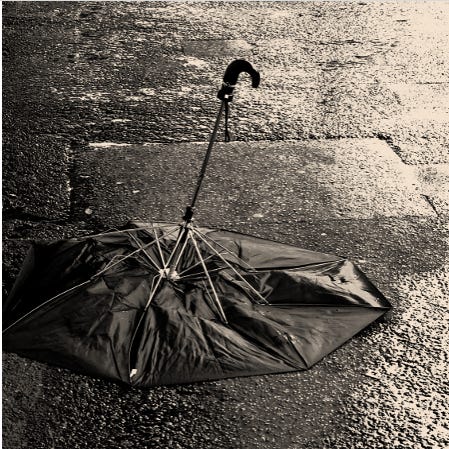
“Throwing out preclearance… is like throwing away your umbrella in a rainstorm because you are not getting wet.”
Hugo Black joined the Klan in the 1920’s. He marched in white robes and spoke at nearly 150 meetings earning him a “Klan Grand Passport” in 1926. None of this came to light during his Supreme Court confirmation hearings. His Klan membership didn’t surface until after his 1937 appointment—an appointment for life. But the country got lucky. Hugo Black later became a champion of civil rights joining the unanimous Brown v. Board decision in 1954.
John Roberts had no such redemption. During confirmation hearings in 2005, John Roberts presented himself as an independent jurist with his well-worn metaphor:
“My job is to call balls and strikes, not pitch or bat.”
Yet when Roberts struck down preclearance with his Shelby County v. Holder opinion in 2013, it rang out like a swing for the bleachers. His professional experience reveals a dogmatic throughline. As clerk for Chief Justice William Rehnquist, he learned all about judicial maneuvering. Under Reagan, Roberts served in the Office of Legal Counsel. His memos on voting rights foreshadowed Shelby County. More decisions followed, each cutting deeper into the Voting Rights Act—Rucho in 2019, Brnovich in 2021.
The final blow came with Louisiana v. Callais. Time of death: April 29, 2026, 10:30 a.m. Nothing about that decision reflected anything like calling balls and strikes. Nothing suggests that John Roberts will become a champion of civil rights like Hugo Black before him.
On May 7 this year, John Roberts addressed a conference in Hershey, Pennsylvania. Eight days after gutting the Voting Rights Act, he made this claim: the Court is “simply not part of the political process.” As for the American public he said:
“I think they view us as purely political actors,
which I don’t think is an accurate understanding of what we do.”
Translation: It’s not us. It’s you. It’s the American people who don’t understand what they’re seeing—across a spectrum of Supreme Court decisions about reproductive rights, guns, race, voting, immigration, unions, regulation, dark money, religion, presidential power, and immunity. Nothing to see here. No politics. No pattern. Just law.
Roberts lecturing Americans isn't landing. A YouGov poll in early May: 38 percent approval.
Roberts claims neutrality. But Justice Samuel Alito has no qualms ripping off the illusion. In his 6-3 Louisiana v. Callais majority opinion, he decries the three liberals—Sotomayor, Kagan, and Jackson—for ignoring settled law.
“The dissent is unabashedly at war with key precedents.”
Precedents? Which precedents? The dissenting liberals are taking issue with political precedents decided by conservatives over the past 15 years. All of them had to do with gutting the Voting Rights Act. Alito never mentions the 1966 decision that upheld the Voting Rights Act. The VRA has been settled law for 60 years. Roberts’ “balls and strikes” fiction is exposed. He’s been batting all along—not calling balls and strikes. Roberts and Alito have done what they needed to do. They built a fortress of recent anti-VRA precedents and declared them untouchable. Sixty-year-old settled law doesn't matter.
No one was surprised that within 24 hours of the Louisiana v. Callais decision, all hell broke loose. Missouri Senator Eric Schmitt had his finger on the trigger. He sent a letter to the Department of Justice demanding that Voting Rights Act districts be challenged nationwide. Harmeet Dhillon who oversees civil rights [sic] at the DOJ replied:
"Senator — we are ON IT." [caps in original]
The Voting Rights Act was murdered by a triple crown: The Supreme Court, the Executive Branch, and Congress.
Days later, the Supreme Court's shadow docket—no briefing, no oral argument—cleared a path for Alabama to use a map that courts had earlier ruled discriminatory under the Voting Rights Act.
The language of the Fifteenth Amendment of the Constitution is spare and clear:
1. The right of citizens of the United States to vote
shall not be denied or abridged by the United States or by any State
on account of race, color, or previous condition of servitude.
2. The Congress shall have power to enforce this article by appropriate legislation.
Congress is not going to act anytime soon.
Liberalism isn’t a set of policy positions—Democrat or Republican. It’s an enlightened framework. It’s a belief that institutions can act as neutral arbiters, that procedural fairness produces legitimate outcomes, that rules applied consistently protect everyone.
When Roberts invoked “balls and strikes,” he was invoking that framework. The umpire’s neutrality. The institutional legitimacy that separates courts from legislatures. He never delivered.
Liberalism stumbles when its procedural safeguards have no enforcement.
When the Chief Justice’s wife makes over $10 million recruiting for elite law firms arguing before him, and Roberts consults the ethics code himself to decide no recusal is necessary, liberalism stumbles.
When “precedent” means only the last fifteen years of conservative victories, not sixty years of settled law, liberalism stumbles.
When separation of powers collapses into coordination, liberalism stumbles.
The Voting Rights Act was liberalism’s answer to this question: What happens when the right of citizens to vote is systematically thwarted?
The answer in 1966 was clear: active enforcement, federal oversight, and preclearance.
Now we’re watching a very different Court along with an anti-voting Congress and hostile Executive dismantle liberalism’s achievement.
Bert Callais made all this possible. The original complaint described him as a "non-African American Voter." Bert Callais is an avowed election denier who attended the January 6, 2021, insurrection at the U.S. Capitol. Bert Callais is now the anointed hero of the election denial movement. And all it took was a partisan Supreme Court to canonize him.
The “balls and strikes” lie is exposed. Roberts claims institutional neutrality while his wife collected $10 million from firms arguing before him. Alito cites precedent while ignoring the 60-year foundation of Voting Rights. The plaintiff who gutted Voting Rights attended the January 6 insurrection. And within 24 hours of the decision, the DOJ Civil Rights Division promised a nationwide assault on voting rights.
Even Hugo Black—a man who marched in Klan robes—only partially dissented in the Voting Rights Act case in 1966. Sixty years later, a Court claiming to call balls and strikes gutted it completely.
Justice Ginsburg was right. Roberts threw away the umbrella and we’re all getting drenched.
O what a 250th anniversary this will be. We’ll call it the midterms.
These are some of the Courtside Warriors holding the line on authoritarianism— fighting to save democracy—and winning. Sign up for their newsletters. Support them if you can. They are joined by Attorneys General in 24 states who have won more than 80% of their cases against the authoritarian regime.
Democracy Forward, Public Citizen, Protect Democracy, Democracy Docket, League of Women Voters, Campaign Legal Center, ACLU, NAACP Legal Defense Fund, Citizens for Responsibility and Ethics in Washington, Democracy Defenders Fund, Brennan Center for Justice, Common Cause There are many more.
The Courts—Especially the Supreme Court—Won’t Save Us.
Nevertheless, we’ve got to support our Courtside Warriors any way we can.
Just Security Litigation Tracker
On January 29, 2025 there were 24 legal challenges
to Trump Administration actions.
As of May 13, 2026, there are now 797…and counting
Interesting article…you teach us beyond.